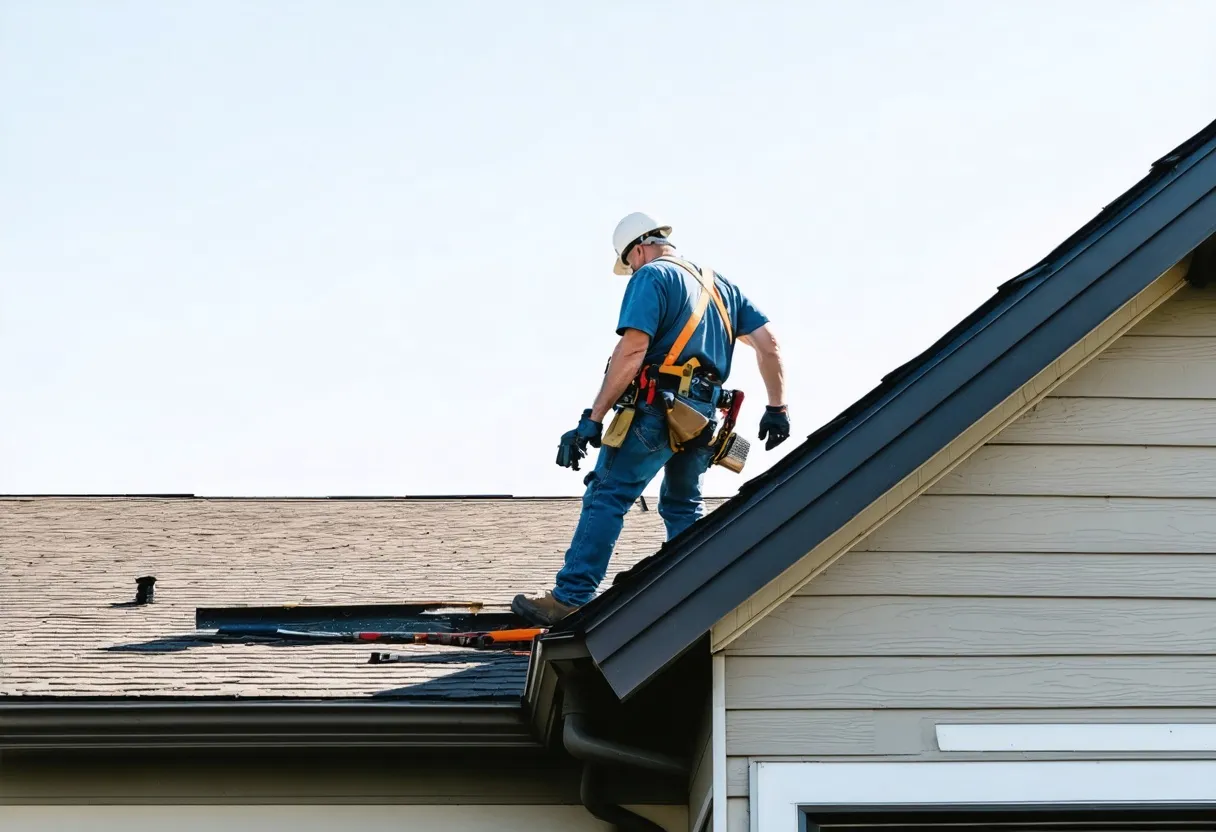
Spokane commercial property owners don't get to treat their roof as an afterthought. Between heavy snow loads, freeze-thaw cycles, and the wind and hail events that come with an Eastern Washington winter, a commercial roof here works harder than in most parts of the country. If you own or manage a retail building, warehouse, medical office, or multi-tenant property in Spokane, the roof over your business is one of the few systems that can shut you down completely if it fails — and one of the most expensive to replace if you wait too long to maintain it.
This page covers what commercial roofing actually involves in the Spokane market: repair versus replacement, the materials that make sense for flat and low-slope commercial buildings, how maintenance contracts work, what drives cost, how insurance claims get handled after a storm, and what to ask before you sign with any contractor. If you want a side-by-side breakdown of material options first, our roofing materials comparison for Spokane buildings is a useful companion to this guide.
What Commercial Roofing Services Cover
"Commercial roofing" is really a bundle of distinct services, and a contractor who's only good at one or two of them isn't the right fit for a building you depend on for revenue. A full-service commercial roofer in Spokane should be able to handle:
- Leak diagnosis and repair on flat, low-slope, and metal roof systems
- Full roof replacement and re-roofing, including tear-off and deck repair
- Scheduled maintenance and inspection programs
- Roof coatings, restoration, and pressure cleaning
- Emergency response for storm damage, active leaks, and structural concerns
- Insurance claim documentation and adjuster coordination
- Material selection guidance across TPO, EPDM, PVC, metal, and modified bitumen
A building that only needs a patch this year may need a full system replacement in five, so it matters that the same contractor can walk you through that whole lifecycle rather than handing you off.
Roof Repair and Leak Repair
Flat and low-slope commercial roofs fail differently than residential shingle roofs. Water rarely announces itself where it enters — it travels along the deck or insulation layer and shows up as a stain on a ceiling tile ten or twenty feet from the actual breach. That's why commercial leak repair starts with a proper diagnosis, not a guess: moisture scans, seam inspection, and a look at flashing details around rooftop units, drains, and parapet walls before anyone applies a patch.
Common failure points on Spokane commercial roofs include split seams on aging single-ply membranes, ponding water around clogged or undersized drains, deteriorated pitch pans around pipe penetrations, and ice-related damage where snow melts and refreezes at roof edges. A legitimate repair addresses the cause, not just the symptom — a patch over a seam that's failing because of thermal movement will fail again within a season.
Roof Replacement
When a roof is past the point where repairs make financial sense — recurring leaks, membrane brittleness, widespread ponding, or simply reaching the end of its rated service life — full replacement is usually the more cost-effective path. Commercial replacement typically involves tear-off of the existing membrane (or in some cases a recover system installed over sound existing roofing), inspection and repair of the deck, new insulation to current code requirements, and installation of the new membrane system with properly detailed flashing, drainage, and penetrations.
Timing matters in this climate. Most commercial re-roofing in Spokane gets scheduled in the drier months, but a well-run crew can also manage smaller sections or phased replacement during shoulder seasons to avoid shutting a business down all at once.
Materials: TPO, Duro-Last, Metal, and Single-Ply Options
Material choice is where most of the long-term cost, energy performance, and durability decisions get made, and it deserves more than a one-line recommendation.
TPO Membrane
TPO (thermoplastic polyolefin) has become the default choice for flat commercial roofs in the Spokane market, and for good reason. It's heat-welded at the seams for a stronger bond than adhered or mechanically fastened alternatives, reflects UV to help with summer cooling loads, and performs well across the wide temperature swings this region sees between winter and summer. A properly installed TPO commercial roof in Spokane can be expected to last 20-30 years with a maintenance program behind it.
Duro-Last Systems
Duro-Last is a prefabricated single-ply system, custom-fabricated to the dimensions of your roof before it ever reaches the jobsite, which cuts down on field seaming and the labor-quality variability that comes with it. It requires a certified installer — not every roofer can legally install and warranty a Duro-Last system, so if that's the product you're considering, confirm your contractor holds current Duro-Last certification before you sign anything.
Metal Roofing
Standing-seam metal is common on Spokane warehouses, ag-adjacent buildings, and steeper-pitch commercial structures where snow-shedding matters. It has a long service life and holds up well under snow load, but it's a different installation discipline than membrane roofing and carries different cost and maintenance considerations. If metal is on your shortlist, our metal roofing guide for Spokane properties goes deeper on panel types and lifespan.
EPDM and Modified Bitumen
EPDM (rubber membrane) and modified bitumen are still in service on plenty of older Spokane commercial buildings and remain valid options for certain applications, particularly where budget is the primary driver or where an existing system is being repaired rather than replaced. They're worth discussing with your contractor rather than ruling out by default.
Asphalt Shingles on Commercial Structures
Steeper-pitch commercial buildings — offices with residential-style rooflines, some multi-family and mixed-use structures — sometimes use architectural asphalt shingle systems rather than flat membrane. GAF and Owens Corning products are the standard here, and a GAF Master Elite or Owens Corning-credentialed installer typically has access to stronger manufacturer-backed warranties than a non-certified crew.
Maintenance and Inspection Contracts
A commercial roof maintenance contract is the single best way to avoid emergency repair calls. A typical program includes two scheduled inspections per year (commonly spring and fall), drain and gutter clearing, seam and flashing checks, minor repairs bundled into the visit, and a written condition report you can use for budgeting and insurance purposes. Buildings under an active maintenance contract also tend to get priority scheduling if a storm does cause damage, which matters when every roofer in the region is fielding calls at once.
For buildings without a maintenance history, an initial inspection typically turns up a punch list — failing sealant, minor membrane wear, debris in drains — that's far cheaper to fix now than after it becomes a leak.
Roof Coatings and Cleaning
Not every aging roof needs full replacement. A restoration coating — silicone or acrylic, depending on the substrate — can extend the service life of a sound but weathering membrane by a decade or more at a fraction of replacement cost, while also improving reflectivity and reducing summer heat gain. Coatings work best as a proactive measure on a roof that's still structurally sound; they're not a fix for a membrane that's already failing at the seams. Routine roof cleaning — removing debris, moss, and organic buildup, especially around drains and low spots — is a low-cost service that meaningfully extends membrane life and should be part of any maintenance plan.
Emergency and 24/7 Service
Roof emergencies don't wait for business hours, and in this climate they tend to cluster around specific events — a heavy snow load, a windstorm, a sudden thaw that overwhelms drains. A commercial roofer serving Spokane needs a real emergency response process: someone who answers when you call, temporary measures (tarping, emergency patching) to stop water intrusion immediately, and a follow-up plan for permanent repair once conditions allow. Ask any contractor directly what their actual emergency response time looks like before you need it — not after.
Certifications and Credentials Matter
Commercial roofing is not a field where "licensed and insured" alone tells you much. Manufacturer certifications are the real signal of installer competence, because manufacturers train and audit the contractors they certify, and they back that training with extended warranties that non-certified installers simply can't offer:
- GAF Master Elite — GAF's highest-tier certification, held by a small percentage of roofing contractors nationally, required for GAF's strongest warranty tiers
- Owens Corning Preferred/Platinum Contractor programs — similar tiered certification tied to extended warranty eligibility
- Duro-Last Certified Contractor — required to install and warranty Duro-Last's prefabricated single-ply systems
Before hiring, ask a contractor directly which manufacturer certifications they currently hold and ask to see documentation. A credentialed installer isn't just a marketing claim — it determines which warranty tiers are even available to you.
How the Process Works
- Initial inspection and estimate. A thorough assessment of the existing roof condition, deck, drainage, and any active leaks, followed by a written, itemized estimate.
- Scope and material selection. Repair vs. replacement, membrane type, insulation upgrades, and warranty tier get decided together based on your budget and how long you plan to hold the building.
- Scheduling. Commercial work is scheduled around your operating hours where possible, with staging and safety plans for occupied buildings.
- Installation. Tear-off (if applicable), deck repair, insulation, membrane installation, and detailing at every penetration, drain, and edge.
- Final inspection and documentation. Walk-through, warranty paperwork, and manufacturer registration where required.
- Ongoing maintenance. Enrollment in an inspection program to protect the investment and the warranty.
What Affects Commercial Roofing Cost
Commercial roofing is priced by the square (100 square feet) and varies more than residential roofing because building-specific factors carry more weight. The main cost drivers are:
- Roof size and complexity — number of drains, penetrations, HVAC units, and roof levels
- Material choice — TPO, Duro-Last, EPDM, metal, and modified bitumen all carry different material and labor costs
- Current roof condition — whether the existing system can be recovered or requires full tear-off
- Deck condition — rot or damage discovered during tear-off adds cost but is far cheaper to fix now than to ignore
- Insulation requirements — code-required R-values on a re-roof can add cost but pay back through energy savings
- Access and building height — equipment and safety staging on taller or harder-to-access buildings
- Warranty tier — manufacturer-backed extended warranties from certified installers cost more upfront and save money over the roof's life
Because these variables swing so widely by building, a real number requires a site visit rather than a phone quote. For general published ranges by material and project type, see our Spokane roofing cost guide.
Financing Options
A commercial roof replacement is a capital expense most businesses don't have sitting in a checking account, and a reputable contractor should be able to walk you through financing options rather than presenting "pay in full" as the only path. That can include contractor-arranged financing programs, phased/sectional replacement to spread cost over budget cycles, and coordination with your insurance carrier when the damage is storm-related (see below). Ask about financing during your estimate, not after you've already committed to a scope.
Request your roof assessment
Tell us about your roof and we'll walk you through materials, cost range, and insurance options if you need them.
More roofing services
Ready to see your options?
Get a clear look at your roof, your material choices, and your cost range — no pressure to decide today.