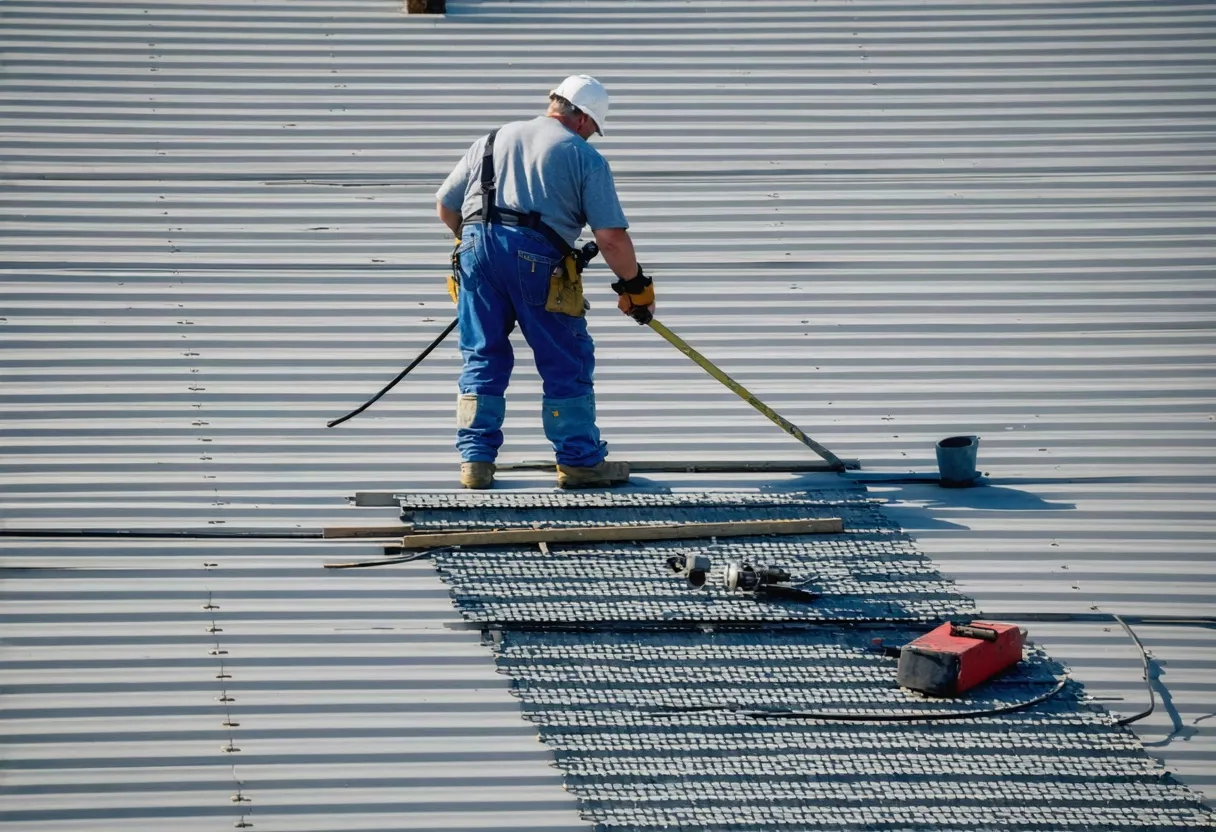
If you're comparing metal roofing in Spokane against another round of asphalt shingles, the math usually comes down to one question: how many winters do you want to pay for a roof? A properly installed standing seam metal roof is built to shed snow load fast, resist wind uplift, and outlast two or three shingle replacements over its service life. This page covers what metal roofing actually includes, what drives metal roof cost in Spokane, how snow-shedding performance changes the way you need to plan your landscaping and gutters, and how a manufacturer-credentialed installer protects you from the corner-cutting that ruins metal roofs in this climate.
Why Spokane Homeowners Are Switching to Metal
Eastern Washington winters put real stress on a roof: heavy wet snow loads, rapid freeze-thaw cycling, and wind-driven storms that roll through the region several times a year. Asphalt shingles are rated for this climate, but they're a consumable product — granule loss, thermal cracking, and ice-dam damage accumulate year over year. Standing seam metal panels, by contrast, use continuous interlocking seams with no exposed fasteners, which eliminates the most common shingle failure point (nail-line leaks) and gives snow and ice almost nothing to grab onto.
That last point matters more here than in most markets. Metal roof snow shedding is a real design consideration, not a marketing phrase — a slick standing seam panel releases accumulated snow in sheets once it warms even slightly, rather than holding it in place until it compacts into ice. That's a benefit for the roof structure, but it changes how you plan the ground below: snow guards are often necessary above entryways, walkways, and parked-car areas so a sudden slide doesn't become a liability. We size and place snow retention systems as part of the estimate, not as an afterthought.
What Our Metal Roofing Service Covers
Metal roofing isn't one product — it's a category, and getting the wrong panel profile or gauge for a Spokane roof pitch is one of the most common mistakes we're called in to fix. Our metal roofing scope includes:
- Standing seam metal roof installation (24-gauge and 26-gauge steel, plus aluminum for coastal-adjacent or corrosive environments)
- Exposed-fastener corrugated and R-panel systems for shops, barns, and budget-conscious residential builds
- Metal re-roofs over existing structural decking, and full tear-offs where the deck needs inspection or repair first
- Snow retention and ice-dam mitigation design specific to your roof's pitch and exposure
- Metal roof repair, including seam re-sealing, fastener replacement, and panel section replacement
- Flashing, valley, and penetration detailing around chimneys, skylights, and vents — the areas where nearly all metal roof leaks originate
Metal is also a strong fit for the shop buildings, detached garages, and outbuildings common on larger lots around Spokane Valley and Liberty Lake, where property owners often want a low-maintenance material on secondary structures without the seam complexity of a full standing seam system on the main house.
Metal Roof Cost in Spokane: What Actually Drives the Number
Metal roof cost in Spokane varies more than shingle pricing because the category itself spans a wide range of materials and installation complexity. On a typical residential re-roof, expect these variables to move the price:
- Panel type — exposed-fastener panels are the most affordable entry point; standing seam runs higher because of the concealed-fastener labor and specialized seaming equipment
- Material — steel is the standard choice for this climate; aluminum costs more but resists corrosion better in any area with heavy road salt exposure
- Gauge/thickness — heavier gauge steel costs more but holds up better under snow load and hail
- Roof complexity — dormers, valleys, multiple penetrations, and steep pitches all add labor hours
- Tear-off vs. overlay — removing old shingles and inspecting the deck adds cost but is usually the right call on an older home
- Snow retention systems — the number of rows and clips needed depends on roof pitch, span, and exposure to walkways or entries
We give every customer a written, itemized estimate that breaks out material, labor, tear-off, and snow retention as separate line items — not a single lump sum — so you can see exactly what you're paying for and compare it against other bids. If you're still deciding between metal and another material, our roofing materials comparison for Spokane homes walks through the cost and lifespan tradeoffs side by side.
Metal Roof Lifespan and Long-Term Value
Metal roof lifespan is the other half of the cost conversation, and it's where metal earns back its higher upfront price. A well-installed standing seam roof commonly performs for 40 to 70 years with minimal maintenance, versus 20 to 30 years for a quality architectural asphalt shingle roof in this region — and that shingle number assumes no major hail or wind events shorten it further. Over a 40-year ownership horizon, most homeowners who run the numbers find metal costs less per year of service than replacing shingles twice.
Finish quality affects lifespan too. Panels with a PVDF (Kynar-based) coating hold color and chalk resistance far longer than cheaper polyester-coated panels, which matters under the intense summer UV swings Eastern Washington gets between seasons. We spec coating type on every proposal so you know what you're buying, not just the panel profile.
Materials We Install: Metal, Asphalt, and Low-Slope Membranes
Not every roof or budget calls for metal, and part of our job is telling you that honestly. We install and repair the full range of materials used in this market:
- Standing seam and exposed-fastener metal — best long-term value, strongest snow-shedding performance
- Asphalt shingles — architectural and three-tab options, the most common residential choice and the most budget-friendly upfront
- TPO membrane — a heat-welded single-ply system used on low-slope and flat sections, common on additions and commercial roofs
- Single-ply systems generally (TPO, EPDM) — chosen for durability and seam reliability on low-slope applications where shingles and metal panels aren't suitable
If your property has both a steep-slope main roof and a flat or low-slope section — a common layout on additions, porches, and commercial buildings — you may need more than one material on the same structure. We handle that transition detailing as part of the same project scope. For a full property, especially anything mixed-use or multi-tenant, see our dedicated commercial roofing services in Spokane for membrane and low-slope specifics.
Metal Roof Repair and Leak Repair
Metal roofs leak far less often than shingle roofs, but when they do, the cause is almost always one of a few specific things: a failed sealant at a fastener or seam, a flashing detail that was never properly tied into the panel system, or physical damage from a falling branch or hail impact. We diagnose the actual leak path before doing any repair — chasing a stain on your ceiling to its real source rather than resealing the first thing that looks suspicious. Repairs typically involve removing and replacing the affected panel section, re-detailing the flashing, or replacing failed fasteners with proper gasketed hardware. We also repair shingle and TPO roofs; if a full metal repair isn't the right fix for your budget or timeline, we'll say so.
Roof Replacement
When a roof is past the point where repair makes sense — widespread granule loss, multiple past leak repairs, storm damage across a large area, or a deck that's failing underneath — replacement is the more cost-effective path. If you're weighing a full tear-off and new install, our page on roof replacement in Spokane covers the process, timeline, and what to expect in more detail than we can fit here, including how we sequence a replacement around this region's weather windows.
Maintenance, Inspections, Coatings, and Cleaning
Metal roofs need less maintenance than shingle roofs, but "less" isn't "none." An annual inspection catches loose fasteners, developing rust at cut edges, sealant that's starting to fail at penetrations, and debris buildup in valleys before any of it becomes a leak. We recommend inspecting after any major windstorm and once a year as routine upkeep — spring, after the snow load season, is usually the right time in this climate.
For roofs that are structurally sound but showing surface wear — chalking, minor rust at fastener heads, or a shingle roof nearing the end of its life but not yet leaking — a roof coating can extend service life at a fraction of replacement cost. Coatings also improve reflectivity, which helps with attic heat load in summer. Roof cleaning (removing moss, algae staining, and debris) is a separate, lower-cost service that protects the finish and keeps warranty coverage intact, since some manufacturer warranties require reasonable maintenance.
Emergency and 24/7 Storm Response
Roofs don't wait for business hours to fail. If a storm has torn off panels, a tree limb has come through your roof deck, or you've got active water intrusion during a weekend snowstorm, we provide emergency response to get your home dried in and stabilized — tarping, temporary flashing, and structural assessment — with the full repair or replacement scheduled once conditions allow safe work. Given how quickly Eastern Washington winter weather can turn, having a roof temporarily secured within hours rather than days is often what prevents a repair from becoming a much larger interior damage claim.
Storm Damage and Insurance Claim Coordination
Wind and hail events across the region regularly generate insurance claims, and the claims process is where a lot of homeowners lose money they're entitled to — not because the damage isn't covered, but because the documentation doesn't support the full scope of loss. Our storm-damage process is built around that gap:
- A full roof inspection with dated, timestamped photo documentation of every affected area, not just the obvious damage
- A detailed scope of work that matches what your policy actually covers, written in the terminology adjusters expect
- Meeting your insurance adjuster on-site so nothing gets missed or downplayed during the inspection
- Coordinating the repair or replacement timeline directly with your claim, so you're not stuck managing two separate processes
We do this work as a matter of course, not as an upsell — it's part of what a manufacturer-credentialed installer should be doing for you after any qualifying storm.
Warranty and Financing
Every installation includes a workmanship warranty backed by our credentials as a manufacturer-certified installer, separate from the manufacturer's material warranty on the panels or shingles themselves. Because we hold certifications including GAF Master Elite, Owens Corning preferred contractor status, and Duro-Last certification for single-ply systems, qualifying installations are eligible for enhanced manufacturer warranty coverage that isn't available through non-certified contractors — coverage that can include both materials and labor rather than materials alone. We'll tell you plainly which warranty tier your project qualifies for before you sign anything.
We also offer financing options for both repair and full replacement projects, with plans structured around monthly payments so a roof emergency or an overdue replacement doesn't have to be an all-at-once expense. Ask during your estimate and we'll walk through current terms.
Request your roof assessment
Tell us about your roof and we'll walk you through materials, cost range, and insurance options if you need them.
More roofing services
Ready to see your options?
Get a clear look at your roof, your material choices, and your cost range — no pressure to decide today.